

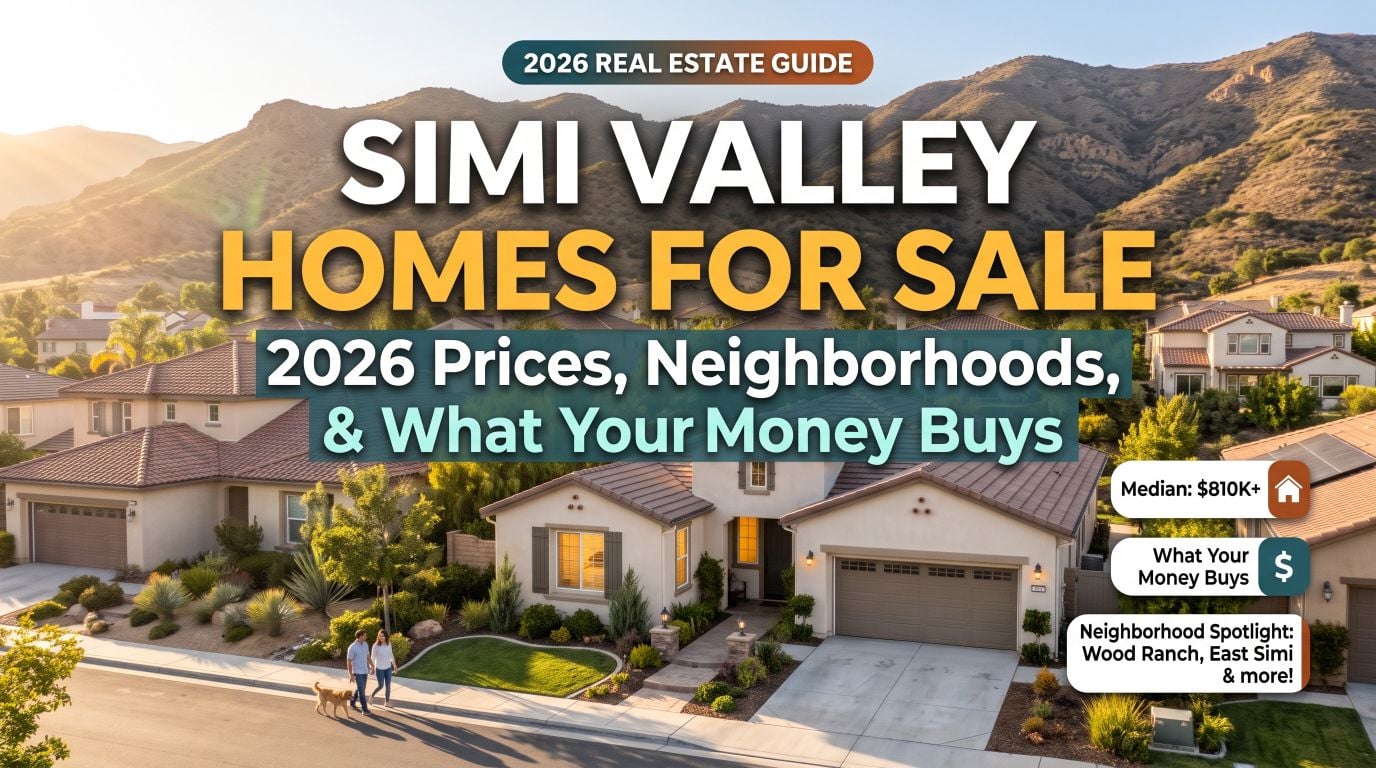

In late 2026, many Simi Valley homes for sale fall roughly in the $700,000 to $1.1 million range, while larger, newer, or premium properties can reach $1.5 million and beyond. Your budget, the home’s condition, lot size, neighborhood, and any HOA or Mello-Roos charges all affect what you can buy. These are approximate ranges, not guaranteed prices, and individual homes can fall outside them.
What your budget may buy in Simi Valley
The examples below are broad late-2026 guideposts. A home’s condition and location can matter as much as its bedroom count, so compare recent sales for the specific tract before making an offer.
- Around $700,000: You may find a condo or townhome, a smaller detached house, or an older home that needs updating. At this level, be ready to weigh size, condition, parking, and monthly HOA costs.
- Around $900,000: This budget can open up more detached homes, often with three or four bedrooms, a private yard, and a conventional suburban lot. Renovation level and exact location vary widely.
- Around $1.1 million: Buyers may see updated or larger detached homes, a pool or more usable outdoor space, and options in sought-after planned areas. Some newer homes may carry HOA dues or Mello-Roos assessments.
- Around $1.5 million and up: This can reach newer or larger homes, premium hillside properties, or homes with substantial land or equestrian features. Bridle Path properties, for example, may offer roughly half-acre lots or more, while custom homes can go well above this range.

Simi Valley neighborhoods: space, setting, and costs
Simi Valley is not one uniform market. Older central tracts, planned communities, hillside neighborhoods, and larger equestrian lots each bring different trade-offs. For a citywide overview first, see our Simi Valley area guide.
- Wood Ranch: A planned area with a range of home styles, from attached properties to larger detached houses. Lots vary by section; some homes have more modest yards, while others offer room for a pool or outdoor entertaining. HOA presence and fees depend on the specific community, and some newer sections may have Mello-Roos.
- Bridle Path: Known for an equestrian setting and larger parcels, often around half an acre to two acres or more. It can suit buyers looking for land, horse facilities, or a less typical suburban lot. Homes and insurance costs can vary considerably, especially near brush areas.
- Big Sky: A newer hillside community with contemporary homes and neighborhood amenities. Lots are generally suburban rather than acreage-sized. Expect to verify the specific HOA rules and whether the parcel has an active Mello-Roos assessment.
- Madera Hills and the Royal Oaks area: A mix of established homes and newer construction near the east side of the valley. Home age, lot size, and monthly costs differ by tract; do not assume every property has the same tax or HOA structure.
- Central Simi near the 118 and Sycamore: A practical location for freeway access and everyday errands, with a broad mix of older homes and attached housing. Many traditional tracts have standard suburban lots, and older sections may offer fewer community-association costs.
- East Simi near Kuehner and Sequoia: A range of homes and subdivision styles, with access to the 118 and nearby routes. Check each home’s age, lot layout, HOA documents, and tax bill rather than relying on neighborhood labels alone.
- Established tracts near Tapo Street: Often include older, single-family homes on conventional neighborhood lots. These can appeal to buyers seeking a more central location, but roofs, plumbing, HVAC, and other major systems may need attention.
Some newer tracts have Mello-Roos charges; other neighborhoods may have an HOA, both, or neither. Confirm the parcel’s current property-tax bill, preliminary title report, and HOA documents before you commit.
Commute, schools, and everyday fit
The 118 Freeway is Simi Valley’s main east-west route. It provides access toward Chatsworth, Northridge, and the west San Fernando Valley. Depending on starting point, traffic, and time of day, many buyers should plan for roughly 30–40 minutes to parts of the 405 and 101 corridors, with peak-hour trips sometimes taking longer. The Ronald Reagan Freeway route also connects west toward Moorpark and the Conejo Valley, with the 23 providing a link toward the Thousand Oaks and 101 area. Test the drive at your actual commute time before choosing a home.
Public schools are served by Simi Valley Unified School District. School assignments and programs vary by address, so verify boundaries directly and visit schools. Some buyers also cross-shop Oak Park and Thousand Oaks when comparing school options, housing costs, and commute needs.
Simi Valley can be a fit for first-time buyers priced out of Thousand Oaks or Westlake Village, families who want more yard, and buyers hoping for a pool or RV parking. It can also work for downsizers who want a detached home without moving farther from Ventura County services. RV parking is not guaranteed, check local rules and HOA restrictions before assuming a driveway or side yard can accommodate it.
Simi Valley vs. Thousand Oaks, Moorpark, and Camarillo
As a broad late-2026 comparison, Simi Valley often offers a lower entry point than Thousand Oaks, while many neighborhoods provide traditional lots and useful access to the west San Fernando Valley. Thousand Oaks typically costs more, but puts many residents closer to the 101 and is often cross-shopped for schools. Moorpark sits between the two in feel and pricing, with routes toward both the 118 and 101. Camarillo can offer competitive prices and a different coastal-Ventura County location, but the Valley commute is generally less convenient.
These are general patterns, not guarantees. House size, condition, neighborhood, school boundary, insurance availability, and assessed charges can shift the comparison. For current market context, ask us for a comparative market analysis of the specific tract, and compare similar properties rather than citywide figures alone.

What buyers should check before making an offer
A well-priced home can still carry substantial future costs. Before you write, pay attention to:
- Major systems: Older homes may need a roof, HVAC, plumbing, electrical, or sewer update. Use inspections to understand condition and likely near-term expenses.
- Insurance: Ask for an insurability check early, especially for homes near brush or hillside areas. The west and south edges of Simi Valley can have more wildfire exposure. Confirm available coverage and cost before removing contingencies.
- Mello-Roos and property taxes: Review the actual tax bill for the parcel. Do not rely on a general neighborhood estimate.
- HOA rules: Read the governing documents, including rules on RV parking, exterior changes, rental limits, and assessments.
- Lot usability: A large lot may have slope, access, drainage, easements, or fire-safety requirements that limit how you use it.
If this is your first purchase, our complete first-time home buyer guide walks through financing in plain order. You can also see how much room you have with the Buyer Readiness Quiz.
How to win a Simi Valley house in 2026
Start with full pre-underwriting, not just a basic pre-approval. A lender who has reviewed income, assets, and credit can help you make a stronger offer and avoid last-minute financing surprises.
Next, shape your inspection and appraisal strategy around the property and your comfort with risk. Understand what you will inspect, how you will handle major findings, and whether you have funds for an appraisal shortfall. An escalation clause can help in a multiple-offer situation, but set a firm ceiling and require evidence of competing offers. A strong offer is not simply the highest number. It is one you can confidently close.
Ross Realty Group has served 348+ families, closed $394M+ in sales, ranks in the top 1.5% nationwide, and holds a 5-star Google rating. You can read client success stories from buyers and sellers across the Conejo Valley.
Simi Valley home-buying FAQ
Is Simi Valley a good place to buy a home?
Simi Valley can be a good fit if you want a suburban setting, a range of home sizes, and access to the 118 and west San Fernando Valley. The right choice depends on your budget, commute, school preferences, insurance options, and the specific neighborhood.
How much do I need down to buy in Simi Valley?
Down payments depend on your loan type, finances, and lender requirements. Some buyers may qualify for a lower down payment, while others choose to put more down. Ask a lender to estimate your cash to close, including closing costs and reserves.
Are there HOA-free neighborhoods in Simi Valley?
Yes. Some established tracts and areas such as Bridle Path generally have no HOA, while planned communities and attached-home developments may have one. Verify the specific property’s title and disclosures.
How competitive is the Simi Valley housing market in 2026?
Competition varies by price, condition, and neighborhood. Move-in-ready homes with useful outdoor space may attract more interest than properties needing major work. Review recent comparable sales and current competing listings before deciding on price and terms.
What should I check before buying a Simi Valley home?
Check the home’s major systems, insurance availability, property-tax bill, any Mello-Roos assessment, and HOA rules. For hillside or brush-adjacent properties, investigate wildfire exposure and defensible-space requirements early.
And if you are selling a Simi Valley home as part of this move, start with a free home valuation so you know what your current house is worth before you set a budget.
Want to get clear on your budget and a strategy for buying in Simi Valley? Book a 15-minute call with Ross Realty Group or call 805-300-1626.
Check out this article next